What is MobileCoin? Should you invest in MobileCoin?
What is MobileCoin? Should you invest in MobileCoin?
MobileCoin is one of the more interesting projects in the crypto space because it aims to make payments both fast and privacy-preserving—a combination that traditional payment networks usually struggle to provide in the same way. If you’ve seen the ticker MOB and wondered what it actually does (and whether it’s worth investing), this guide breaks it down clearly.
Quick facts: MobileCoin (symbol MOB) is currently ranked around #103 by market data providers, with a circulating supply of about 198,399,727 MOB.
Introduction
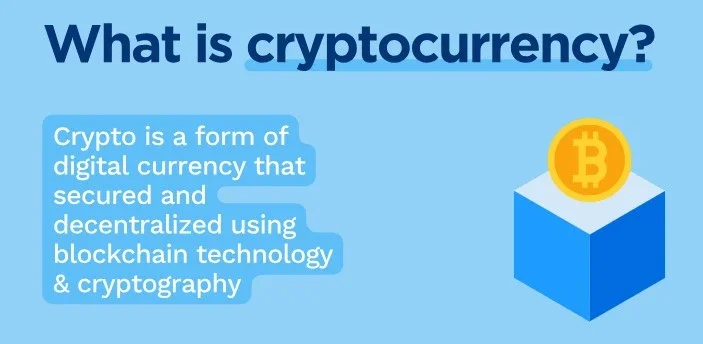
MobileCoin is a blockchain-based cryptocurrency designed specifically for everyday payments. Unlike many cryptocurrencies that are primarily built for decentralization and smart-contract ecosystems, MobileCoin’s focus is narrower: enable mobile-friendly transactions that are intended to be more private, practical, and resistant to common payment issues (such as friction, visibility of transactions, and slow confirmations).
In simple terms, MobileCoin wants to answer: Can we build a digital currency that feels like a modern payment app, while still giving users meaningful privacy?
That goal is ambitious, and like any crypto asset, it comes with trade-offs. Let’s look at what MobileCoin is, how it works, and what to consider before investing.
How MobileCoin Works
MobileCoin is built on a privacy-first approach. While it uses blockchain fundamentals, it emphasizes features that aim to protect user privacy during transfers.
1) Payment-focused design
MobileCoin is engineered to support transfers that resemble typical payment flows—meaning it’s designed with usability in mind. The goal is not just to move tokens on a blockchain, but to make sending and receiving payments as smooth as possible for real-world use.
2) Privacy features (the core differentiator)
A major differentiator of MobileCoin is privacy. Instead of making all transaction details publicly visible in the same way as many transparent blockchains, MobileCoin uses cryptographic techniques to conceal information such as who sent funds and how much was sent.
Importantly, privacy is not usually “all or nothing” in modern crypto systems—there are trade-offs and system rules. The project focuses on enabling privacy while still maintaining the ability to prevent certain types of abuse.
3) Mobile and user experience
MobileCoin’s ecosystem is designed to work well with mobile users. This matters because many people interact with crypto through phones, and usability can make or break adoption.
If a cryptocurrency is too complex to use, it tends to stay niche. MobileCoin’s emphasis on payments and mobile experience is aimed at broader usability.
4) The role of MOB (the token)
Like most crypto networks, MobileCoin’s token MOB is central to its economy. Depending on the network mechanics and ecosystem structure, MOB can be used for fees, settlement, or other functions within the MobileCoin ecosystem.
Pros and Cons
Before deciding whether MobileCoin makes sense for you, it helps to weigh the advantages and disadvantages clearly.
Pros
1) Strong focus on payments
Many crypto projects chase everything at once (DeFi, NFTs, governance, etc.). MobileCoin’s focus on payments can make the product vision easier to understand.
2) Privacy as a primary feature
Privacy is a major reason investors and users find MobileCoin compelling. If privacy-preserving payments become more widely accepted, MobileCoin could benefit from that trend.
3) Designed with mobile users in mind
Mobile-first thinking can improve adoption potential compared to projects that are mostly “desktop-native.”
4) Ongoing relevance in a competitive market
Even if MobileCoin isn’t the largest project, its existence highlights a real demand: people want digital money that’s usable and not overly exposed.
Cons
1) Regulatory and compliance uncertainty
Privacy-focused technologies can attract regulatory attention. Depending on how jurisdictions interpret privacy features, future restrictions could affect adoption or exchange support.
2) Competitive landscape is tough
The payment and privacy markets already include many contenders—ranging from privacy coins to stablecoins and mainstream payment rails. Winning user mindshare is difficult.
3) Adoption risk
A project can be technically impressive but still struggle to gain traction. Real-world adoption depends on partnerships, user experience, developer ecosystem, and liquidity.
4) Complexity compared to simpler coins
If you’re new to crypto, MobileCoin’s privacy mechanics may be harder to understand than straightforward “send token on a transparent ledger” assets.
Should Beginners Invest in MobileCoin?
This is a common question, and the honest answer is: it depends on your goals and risk tolerance.
When MobileCoin might be suitable for beginners
- You’re comfortable with the fact that crypto is volatile.
- You want exposure to a project that’s built around a specific use case (payments with privacy).
- You plan to do basic research and understand what you’re buying—at least at a high level.
When it may not be suitable
- You’re brand new and want “low complexity” crypto exposure.
- You prefer assets with simpler narratives and fewer regulatory/market-structure uncertainties.
- You’re expecting quick, guaranteed returns. No investment in crypto is predictable.
Beginner-friendly approach (if you choose to invest)
If you decide to invest in MOB as a beginner:
- Start small (so you can tolerate swings).
- Avoid leverage and complex trading strategies.
- Think in terms of long-term learning and exposure, not short-term speculation.
- Use reputable exchanges/wallets and double-check security practices (2FA, hardware wallets for larger amounts, etc.).
Investment Potential
Investment potential is partly about fundamentals and partly about market behavior. Here are the main drivers that could influence MOB’s future performance.
1) Demand for privacy-preserving payments
If people increasingly want digital payments that don’t reveal transaction metadata, privacy-focused networks may gain attention. MobileCoin is positioned around that narrative.
2) Usability and real-world integration
Adoption typically grows when platforms integrate with real payment workflows—wallets, merchant tools, partnerships, and developer building. MobileCoin’s payment-first design could help it if execution matches the vision.
3) Liquidity and exchange accessibility
For many investors, the biggest practical factor is whether MOB is easy to buy and sell on liquid venues. Higher liquidity can improve market stability and trading accessibility.
4) Market sentiment around “utility coins”
MobileCoin’s thesis is not just “privacy coin” but “privacy + payments.” If the market starts rewarding practical payment infrastructure again, MOB could benefit.
That said, crypto markets can rotate quickly. Even strong projects can underperform if attention shifts elsewhere.
Risks
Every investment has risks, and with crypto they’re amplified. Here are the key ones to understand for MobileCoin:
1) Price volatility
MOB can experience sharp price swings. If you need your money soon, this may not be the right asset.
2) Regulatory risk
Privacy features can lead to compliance challenges depending on country regulations. If exchanges or platforms restrict access, liquidity and price can suffer.
3) Adoption and competition risk
Even with a good idea, user adoption is uncertain. MobileCoin competes with:
- other privacy-focused networks,
- stablecoin payment ecosystems,
- and mainstream blockchain payment tools.
4) Technology and ecosystem risk
Technology roadmaps can change, development can slow, and competitors can outpace. Also, cryptographic and privacy-related systems are complex—there can be engineering or implementation risks over time.
5) Market ranking isn’t a promise
Being around #103 indicates some visibility, but ranking alone doesn’t determine future performance. Market structure changes, and sentiment can shift.
Conclusion
MobileCoin (MOB) is a payment-focused cryptocurrency with a clear differentiator: privacy-preserving transactions designed for a more mobile-friendly experience. Its vision—making digital payments both usable and private—has real appeal in a world where many payment rails reveal too much.
Should beginners invest in MobileCoin?
It can be suitable for beginners only if you understand the volatility, do your own research, and treat it as a higher-risk asset rather than a “safe” investment. If you’re new to crypto, consider starting with a small position, learning the basics of how it works, and keeping expectations realistic.
Ultimately, whether MOB is a good investment depends on your belief in its adoption path—privacy-preserving payments at scale—and your ability to handle the inevitable ups and downs of the crypto market.
If you want, tell me your investment timeframe (e.g., 3 months vs 3 years) and risk tolerance, and I can suggest a beginner-friendly way to evaluate whether MOB fits your portfolio.
🚀 Trade MobileCoin
Start trading MobileCoin with low fees and high liquidity.