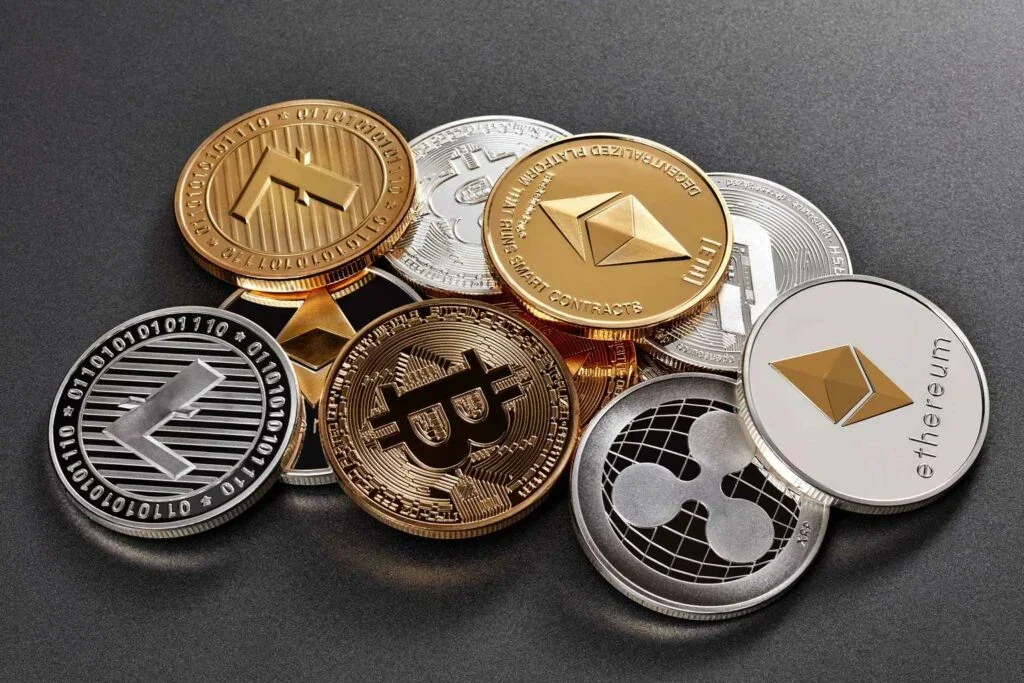
What is Hedera? Should you invest in Hedera?

What is Hedera? Should You Invest in Hedera?
Cryptocurrency is full of names that sound futuristic, but only a few projects actually try to solve problems in a practical way. Hedera (HBAR) is one of those projects. It’s often discussed for its focus on real-world use cases—especially enterprise-grade performance, predictable governance, and a structured approach to adoption.
That said, “good technology” doesn’t automatically mean a good investment. In this article, we’ll break down what Hedera is, how it works, and—most importantly—whether beginners should consider investing in HBAR.
Introduction
Hedera Hashgraph (commonly shortened to Hedera) is a distributed ledger platform designed to handle transactions efficiently and securely. Unlike many blockchain networks that rely on one main consensus model, Hedera uses a unique approach and a governance structure that aims to support long-term stability.
With HBAR as its native token, Hedera is positioned as more than just a coin for speculation. The platform is intended to power applications like payments, tokenization, and enterprise workflows—where reliability and throughput matter.
At the time of writing, Hedera’s data typically places it among the top cryptocurrencies by market presence (commonly around rank #16), with a circulating supply of 43,323,141,652 HBAR.
But the key question remains: Should you invest in Hedera—especially if you’re new to crypto?
How Hedera Works
To understand whether Hedera is investable, you first need to understand what it does technically.
1) Hashgraph vs. Traditional Blockchains
Hedera is built on a data structure often described as hashgraph, which is designed to support fast, scalable distributed consensus.
In simpler terms, Hedera’s network works with nodes exchanging information in a way that allows it to reach agreement efficiently—without requiring the typical “block-by-block” world many people associate with older blockchain designs.
2) Consensus: Governing Agreement Services
Hedera uses a governance model tied to its consensus mechanism. A key part of Hedera’s design is that consensus is reached across nodes operated by governing entities.
This differs from networks where anyone can participate as a validator in a permissionless way (though Hedera’s overall design is still decentralized in important respects). The goal is to reduce central points of failure and improve consistency.
3) Three Main Services: HBAR, App Layer, and Fees
Hedera isn’t just a ledger—it’s designed to run applications with multiple transaction types, commonly referred to as “services,” such as:
- Hedera Consensus Service (HCS): Useful for timestamping and proving that certain data agreed upon by the network.
- Hedera Token Service (HTS): Built-in token creation and management for fungible and non-fungible style assets.
- Hedera File Service (HFS): Storing larger data off-chain with integrity proofs on-chain.
Users typically interact through applications that submit transactions to Hedera. Transactions require fees, which are paid in HBAR. Those fees help secure and run the network over time.
4) Smart Contracts and Execution
Hedera supports smart contracts in ways that aim to be enterprise-friendly. Developers can build applications that rely on Hedera’s speed and low latency characteristics.
For investors, the takeaway is: the value proposition is tied to usage. If more real applications are built and transactions increase, demand for network resources can rise.
Pros and Cons
No project is perfect. Here are the main strengths and weaknesses investors should consider.
Pros
1) Enterprise-focused design
Hedera has positioned itself toward institutions and regulated environments. The focus on predictable performance and reliability is a major part of the appeal.
2) Strong governance structure (in concept)
The idea of governing nodes is meant to bring consistency and credibility. While governance doesn’t guarantee price appreciation, it can make the network feel more stable.
3) Multiple built-in services
Hedera’s token, file, and consensus services reduce the need to build everything from scratch. That can speed up development and shorten time-to-market for certain use cases.
4) Reduced technical friction for developers
If the network is easier to work with—through tools, SDKs, or predictable performance—more developers may build on it. More developers can lead to more applications.
Cons
1) Centralization concerns (depending on viewpoint)
Even if governance is designed to be legitimate and diverse, some crypto users argue that permissioned governance differs from fully permissionless decentralization.
That doesn’t automatically make it “bad,” but it’s a real debate that can affect sentiment.
2) Competition is intense
Hedera operates in a crowded environment. Platforms like Ethereum, Solana, Polygon, and others compete for the same developers, liquidity, and enterprise interest—each with different trade-offs.
3) Adoption is required for price upside
Like all crypto assets, HBAR’s long-term value likely depends on real usage—not just announcements. If transaction demand stays modest relative to expectations, price growth may be limited.
4) Complexity for beginners
Even if Hedera is understandable at a high level, investing decisions in crypto often involve token economics, network adoption, and market cycles—all of which can be overwhelming for new investors.
Investment Potential
Let’s talk about what could drive Hedera’s value over time.
1) Network usage and transaction demand
When more applications run on Hedera—especially those that require frequent transactions—demand for HBAR (for fees and network resources) can rise.
That said, investors should look for measurable indicators, such as:
- Growth in active accounts and transaction counts
- Number and quality of deployed applications
- Partnerships that lead to actual usage (not just marketing)
2) Token utility
HBAR isn’t just a “network token” in theory; it’s used to pay fees and interact with Hedera services. Utility can matter, but it still depends on whether Hedera’s services become widely adopted.
3) Market dynamics
Even if Hedera’s fundamentals improve, crypto prices are heavily influenced by:
- Overall market sentiment
- Liquidity and exchange support
- Bitcoin’s cycle and correlation with the broader market
- Macro conditions (interest rates, risk appetite)
For investors, it’s important to separate what could improve HBAR long term from what could affect price short term.
4) Supply and dilution considerations
Hedera has a large circulating supply. When analyzing investment potential, consider:
- How the ecosystem manages emissions over time
- Whether the market price can absorb new supply without sustained demand
This isn’t unique to Hedera, but it’s worth keeping in mind.
Risks
If you’re considering HBAR, you should understand the main risks—especially as a beginner.
1) Price volatility
Crypto assets can drop significantly in bear markets and move quickly in bull runs. Hedera could follow the broader trend, even if network fundamentals hold steady.
2) Adoption risk
The biggest fundamental risk is that Hedera may not capture enough real-world usage. Many crypto projects have strong tech narratives but limited adoption.
3) Competitive risk
If competitors offer similar capabilities with more momentum (or lower friction for developers), Hedera could struggle to grow sustainably.
4) Regulatory and market risk
Regulation can affect:
- Exchange listings and liquidity
- Investor access
- The broader token economy Even if Hedera is “technically sound,” regulatory changes can still influence price.
5) Governance and sentiment risk
Because Hedera’s model differs from many decentralization-first networks, it can face shifts in community sentiment. Even small changes in perception can influence demand.
Should Beginners Invest in Hedera?
A balanced answer: Hedera can be worth considering for beginners, but it’s not automatically the best “first coin” for everyone.
When Hedera may be a good fit for beginners
- You’re interested in long-term investing and can hold through volatility.
- You want exposure to a project with a clear platform focus (not just meme-driven narratives).
- You’re willing to do basic research beyond headlines—understanding what HBAR is used for.
When you might want to be cautious
- You’re only looking for quick profits.
- You don’t yet understand how risk works in crypto markets.
- You’re not comfortable with drawdowns (potential large losses during market downturns).
- You haven’t studied tokenomics and adoption metrics at all.
A practical beginner approach
If you decide to invest, consider:
- Using small position sizing you can tolerate
- Avoiding leverage
- Planning an entry strategy (e.g., dollar-cost averaging)
- Treating crypto as a high-risk category, not guaranteed income
Also, remember: there’s no “safe” crypto. Even projects with strong teams and technology can underperform.
Conclusion
Hedera (HBAR) is a distributed ledger platform designed with enterprise use cases in mind, combining a distinctive consensus approach with built-in services like tokens, files, and consensus timestamps. The network’s focus on reliability, governance structure, and developer experience is a real differentiator in a crowded crypto landscape.
So, should you invest in Hedera?
If you’re a beginner, Hedera may be reasonable to consider—**but only as part of a broader risk-aware
🚀 Trade Hedera
Start trading Hedera with low fees and high liquidity.