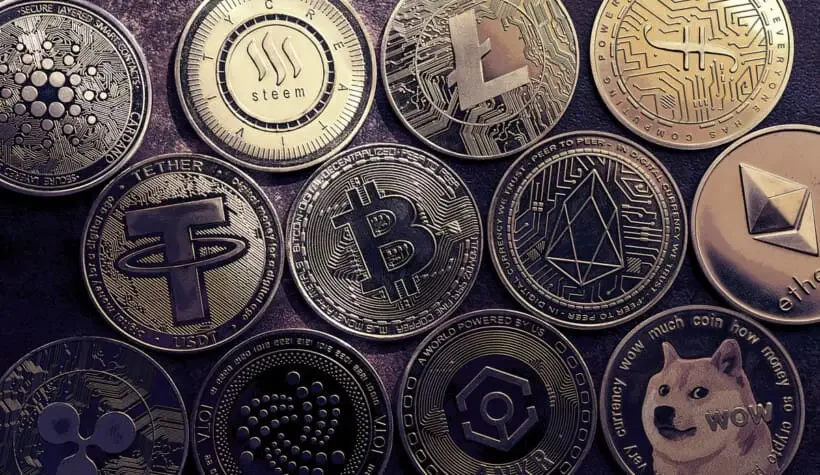
What is Flare? Should you invest in Flare?
What Is Flare (FLR)? Should You Invest in Flare?
Introduction
Flare (FLR) is a blockchain project designed to help decentralized applications (dApps) and smart contracts access real-world data and interact with other networks more smoothly. It’s often discussed among investors because it aims to solve interoperability and data-flow problems—two issues that still limit how broadly crypto can be used.
If you’ve seen FLR listed among top cryptocurrencies and wondered whether it’s a smart beginner-friendly investment, this article will walk you through what Flare is, how it works, the potential upside, and the risks to consider before buying.
Quick facts: Flare’s token is FLR, and it currently has a circulating supply of ~85.75 billion coins (per the data provided). Flare is also ranked around #29 by market interest/visibility.
What Is Flare?
At a high level, Flare is a network built to bring “smart contract utility” to more use cases—especially those that require trustworthy data. Many blockchains struggle with the same bottleneck: smart contracts can only act on information inside the blockchain environment. To do useful work—like pricing assets, verifying events, or executing cross-chain actions—they need data from outside sources or from other networks.
Flare’s mission is to make that external data and cross-chain interaction more practical and reliable.
Where Flare fits in the crypto landscape
Flare is best understood as a middleware and infrastructure layer rather than just a single application. Projects that need:
- verified information (oracles),
- bridging/cross-chain messaging, and
- advanced contract capabilities
may find Flare relevant.
How Flare Works (In Plain English)
Flare’s architecture centers around enabling secure data delivery and interoperability. While the full technical details can be complex, the core concept is easier:
1) Smart contracts need reliable data
Imagine you want a DeFi app on-chain that reacts to real-world or cross-chain events—like the price of an asset or a change on another network. A smart contract can’t “know” these things by itself.
2) Flare uses a system to bring data into the blockchain
Flare is designed to support mechanisms (often described in terms of oracles and data services) that connect off-chain information to on-chain logic. The goal is to reduce the risk of bad or manipulated data.
3) It supports interoperability between ecosystems
Crypto isn’t one single network. Tokens and users are spread across chains. Flare aims to make it easier for applications to integrate across chains—so developers can build functionality without being limited to one isolated environment.
4) FLR is the native token
FLR generally plays a role typical of many ecosystems:
- supporting network operations,
- aligning incentives for participants,
- and powering parts of the system’s economics.
(Exact mechanics can depend on the features currently live on the network, so it’s always worth checking current documentation before making conclusions.)
Pros and Cons of Investing in Flare
Like any crypto, Flare has strengths—but also meaningful uncertainties. Here’s a balanced view.
✅ Pros
1) Clear infrastructure goal
Flare is positioned around real problems: data reliability and interoperability. These are not niche issues; they’re foundational to how many crypto applications function.
2) Potential for use-case growth
If more developers build on Flare or integrate its capabilities, demand for FLR (directly or indirectly) could improve. Infrastructure projects can benefit from network adoption over time.
3) Market visibility and established presence
With a relatively high ranking (around #29 per your data), Flare has enough attention that liquidity and trading access are typically easier than for newer, smaller projects.
4) Broad “platform” thesis
Even if a single app doesn’t take off, platforms that solve infrastructure needs can still see adoption through multiple partners and integrations.
❌ Cons
1) Adoption risk (infrastructure doesn’t guarantee demand)
A project can have strong technology but still struggle with real-world uptake. The biggest question for many networks is: will meaningful developers and users actually come?
2) Crypto token value depends on narratives
Even when technology improves, token prices can be driven heavily by broader market cycles, attention, and investor sentiment. Flare’s performance may not track fundamentals in the short term.
3) Complexity for newcomers
“Flare does interoperability and data connectivity” is easy to say, but evaluating infrastructure projects can be harder for beginners—because measuring success often requires understanding technology, partnerships, and usage metrics.
4) Competition is intense
Many blockchain ecosystems are working on similar challenges—bridges, oracles, cross-chain messaging, and interoperability layers. Flare competes with other platforms that may offer easier developer onboarding or stronger ecosystems.
Should Beginners Invest in Flare?
The beginner answer: possibly, but only with proper risk management
Flare can be a reasonable watchlist asset for beginners—but it may not be ideal as a first or “set-and-forget” investment.
Here’s a practical way to think about it:
When Flare might make sense for beginners
- You’re willing to hold long-term (not days or weeks).
- You understand that crypto infrastructure coins can be volatile.
- You want exposure to the “interoperability/data” narrative and can tolerate uncertainty.
- You plan to invest a small portion of your portfolio rather than an outsized amount.
When it might not make sense
- You’re looking for stable, low-risk returns.
- You don’t want to do additional research beyond the basics.
- Your time horizon is short.
- You’re uncomfortable with large price swings common in mid- to large-cap tokens.
A simple rule of thumb
If you’re a beginner, consider limiting single-altcoin exposure to a small percentage of your overall crypto allocation—then diversify and only add after you understand the project’s ecosystem and latest updates.
Investment Potential: What Could Go Right?
When people ask about FLR’s investment potential, they’re usually looking for catalysts. Possible upside scenarios include:
1) Growing developer activity and real integrations
If more dApps build on Flare—or existing ones expand—network usage could rise. Over time, this can create conditions where FLR becomes more valuable.
2) Stronger cross-chain adoption
If Flare becomes a go-to interoperability/data layer for assets and applications, it can capture usage and attention that drives demand for its token.
3) Positive market conditions for “infrastructure” narratives
Altcoins often benefit when investors rotate into growth themes like interoperability, oracle networks, and cross-chain tooling. Even projects with moderate fundamentals can outperform during strong bull phases.
4) Token utility improving over time
If FLR’s role in the network becomes more direct—through staking, usage-based incentives, or other mechanisms—holders may benefit more clearly than in purely “speculative” models.
Still, remember: “potential” doesn’t mean “guaranteed.” Many projects fail to meet expectations even with strong ideas.
Risks to Consider (Important)
Before buying FLR, you should understand the major risks that typically affect tokens like Flare.
1) Price volatility and market downturns
Crypto prices can drop quickly during broader market sell-offs. Even if Flare’s tech improves, the token price might still decline.
2) Technology and execution risk
Infrastructure projects evolve. If key components face delays, bugs, or lower-than-expected performance, market confidence can weaken.
3) Adoption risk
Oracles and interoperability are only valuable when developers integrate them and users actually use the resulting applications. Without demand, the token may underperform.
4) Regulatory and compliance uncertainty
Regulation affects how easily people can buy/sell tokens and how infrastructure projects partner with traditional businesses.
5) Competition from other ecosystems
With many competing oracle and interoperability solutions, Flare must keep delivering unique value. If developers prefer other platforms, FLR’s growth could stall.
6) Token supply dynamics
With a large circulating supply (~85.75B FLR), it’s important to understand how FLR issuance, incentives, and utility work over time. Large supplies aren’t automatically bad—but they mean you should pay attention to whether demand can meaningfully offset any ongoing distribution.
Conclusion
Flare (FLR) is an infrastructure-focused crypto project aimed at connecting smart contracts to trustworthy data and improving interoperability across blockchain ecosystems. Its thesis—making real-world information and cross-chain communication more practical—is compelling, especially as dApps continue to expand beyond single-network limitations.
Should you invest in Flare?
- Beginners: Flare could be suitable for a small, carefully sized allocation if you’re comfortable with volatility and willing to research the ecosystem.
- Long-term investors: If you believe in the future of interoperability and data-driven smart contracts, Flare is worth monitoring—particularly for signs of adoption and utility growth.
As with any crypto investment, the biggest deciding factor is not hype—it’s your risk tolerance, time horizon, and whether you can handle the uncertainty that comes with infrastructure tokens.
If you’d like, tell me your investment timeframe (weeks, months, or years) and risk level (low/medium/high), and I can suggest a beginner-friendly approach for researching FLR further and sizing a potential position.
🚀 Trade Flare
Start trading Flare with low fees and high liquidity.