What is Constellation? Should you invest in Constellation?
What Is Constellation? Should You Invest in Constellation?
Introduction
If you’ve spent any time exploring crypto markets, you’ve probably noticed that thousands of projects compete for attention—and most never make it beyond hype. Constellation, traded under the ticker DAG, is one of the networks that aims to stand out with a different approach to blockchain architecture. With a circulating supply of ~2.87 billion DAG tokens and a market presence reflected in its current rank around 125, it’s worth understanding what Constellation is trying to do before deciding whether it belongs in your portfolio.
In this article, we’ll break down what Constellation is, how it works, and—most importantly—whether beginners should consider investing in DAG.
Note: This is not financial advice. Crypto investing involves significant risk, and prices can be volatile.
What Is Constellation?
Constellation is a blockchain and distributed network platform built around the idea that performance and scalability can be improved by using a structure known as a DAG (Directed Acyclic Graph) rather than a traditional linear blockchain.
In simple terms:
- A blockchain stores data in a chain of blocks.
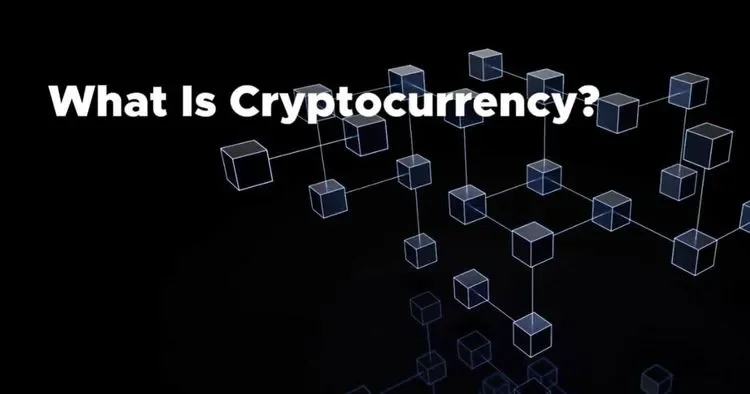
- A DAG-based system can validate and organize transactions in a web-like structure, potentially allowing more parallel processing.
Constellation is designed to support the creation and execution of decentralized applications (dApps) and to enable a network where nodes coordinate to validate activity without relying solely on a single sequential chain.
How Constellation Works (DAG Explained Simply)
To understand Constellation, it helps to understand the concept of DAG at a high level.
1) DAG vs. Traditional Blockchain
In a traditional blockchain, transactions typically get grouped into blocks, and those blocks are appended one after another.
A DAG allows transactions (or events) to be linked in a directed structure where:
- You can have multiple transactions validated independently
- Dependencies are represented through directed links
- The structure remains acyclic, meaning it can’t loop back on itself
This design can reduce bottlenecks that occur when everything must wait for the “next block.”
2) Validation and Consensus
Like other decentralized networks, Constellation needs a way to ensure that participants agree on the state of the system. While exact mechanics vary by protocol details, DAG-based systems generally aim to:
- Keep throughput high by enabling parallel processing
- Coordinate nodes so that the network reaches a consistent view of transactions
- Use a combination of validation rules and network incentives
The goal is to make confirmation faster and make the system more scalable as usage grows.
3) Token (DAG) Utility
DAG is the native token of the ecosystem. In most projects, the native token plays roles such as:
- Network incentives (rewarding participation)
- Fees or transaction costs
- Staking/governance-related functions (depending on the design)
What matters for investors is not just whether the token exists, but whether demand for the token increases as the network grows. That demand typically depends on real usage—like dApps, validators, and ecosystem activity.
Should Beginners Invest in Constellation?
This is the question many people ask, and the honest answer is: it depends on the beginner’s risk tolerance and what you’re trying to achieve.
Beginners who might consider DAG
A beginner could consider Constellation only if they are comfortable with the realities of smaller-cap crypto exposure:
- You understand that prices may swing dramatically.
- You’re investing money you can afford to lock away for months (or longer).
- You are willing to research the project’s roadmap and ecosystem activity.
- You don’t expect a guaranteed “easy win.”
Beginners who should be cautious
If you’re looking for a low-risk, “set it and forget it” investment, DAG may not be the best fit. Constellation is not among the top large-cap coins, and projects ranked around ~125 often face:
- Higher volatility
- More competition from other networks
- Uncertainty about adoption and long-term traction
The key beginner mindset
If you decide to invest, the most beginner-friendly approach is usually:
- Start small
- Diversify rather than go all-in
- Use a plan (e.g., gradual buying) rather than chasing price movements
- Keep expectations realistic
Pros and Cons of Constellation
Pros
1) DAG-based design for scalability
DAG architectures are often chosen because they can potentially enable greater throughput than purely sequential blockchains. If implemented effectively, this could help Constellation handle more activity.
2) Differentiation in an overcrowded market
Crypto is full of “me too” platforms. Constellation’s DAG approach gives it a distinct technical direction, which can be attractive if it leads to real-world performance improvements.
3) Active ecosystem potential
Any smart contract network or platform can grow through dApps, partnerships, and developer adoption. If Constellation attracts builders, the token can benefit indirectly.
Cons
1) Technology does not guarantee adoption
Even strong technical design can struggle if developers and users don’t choose it. Investors should evaluate traction: active usage, developer activity, and ecosystem growth.
2) Competition is intense
Other DAG-leaning or high-throughput L1/L2 chains compete for the same attention. Constellation must prove it can deliver better performance, better economics, or better tooling.
3) Token value is uncertain
Token price depends on a complex mix of market sentiment, liquidity, network usage, and broader crypto cycles. Without consistent demand drivers, token value may stagnate.
4) Risk of “narrative” investment
Some projects rise because of narrative momentum rather than sustained fundamentals. Investors can reduce risk by focusing on measurable progress rather than hype.
Investment Potential: What Could Make DAG Rise?
To evaluate investment potential, it’s useful to ask: what would need to happen for the market to become more bullish on Constellation?
1) Increased network usage
If Constellation hosts more dApps and processes more transactions, there can be increased utility for the ecosystem and stronger demand expectations for DAG.
2) Developer growth and partnerships
Sustained developer activity often leads to better products, integrations, and user onboarding. If Constellation becomes a popular destination for builders, market interest can follow.
3) Improved token economics
Token value tends to benefit when supply dynamics and demand drivers align—for example, through fees, staking rewards, or other mechanisms that increase how often DAG is used or held.
4) Market cycle tailwinds
Even strong projects can underperform during bearish markets. Conversely, risk-on cycles can lift many tokens beyond fundamentals. If the broader market turns favorable, DAG could benefit.
Risks to Consider Before Investing
Even if Constellation has promising ideas, there are risks every investor should recognize:
1) High volatility and liquidity risk
Cryptocurrencies around the mid-rank range can experience sharp price moves. Liquidity varies by exchange and market conditions, which can affect your ability to enter and exit positions.
2) Execution risk
A project’s success depends on real delivery: code quality, network stability, security, and roadmap execution. Delays or shortcomings can hurt sentiment.
3) Competitive pressure
If other ecosystems offer better developer experience, lower costs, or broader adoption, Constellation may struggle to grow.
4) Smart contract and security risks
Even non-custodial systems can face bugs and vulnerabilities. Security incidents can damage trust quickly.
5) Regulatory and macro risks
Crypto is influenced by regulatory shifts and macroeconomic factors such as interest rates and risk appetite. These risks are external to the technology itself but can still impact price.
Conclusion
Constellation (DAG) is a cryptocurrency project built around the DAG architecture, aiming to improve how transactions are validated and how scalability can be approached. Its differentiation from traditional linear blockchain designs may be appealing, and there’s potential if the network can attract developers, grow real usage, and build meaningful token demand.
Should beginners invest in Constellation?
For beginners, DAG can be an option—but only with caution. If you’re new to crypto, consider Constellation only if you:
- understand the risks,
- keep your position small,
- diversify,
- and focus on fundamentals and measurable progress rather than price speculation.
If you want “safer” exposure, many beginners prefer starting with more established large-cap assets before exploring mid-ranked projects like Constellation.
If you’d like, tell me your investment timeframe (e.g., weeks, months, years) and risk tolerance (low/medium/high), and I can suggest a framework for deciding how to size a potential DAG position—without making it a one-size-fits-all recommendation.
🚀 Trade Constellation
Start trading Constellation with low fees and high liquidity.