Is BingX copy trading profitable or risky
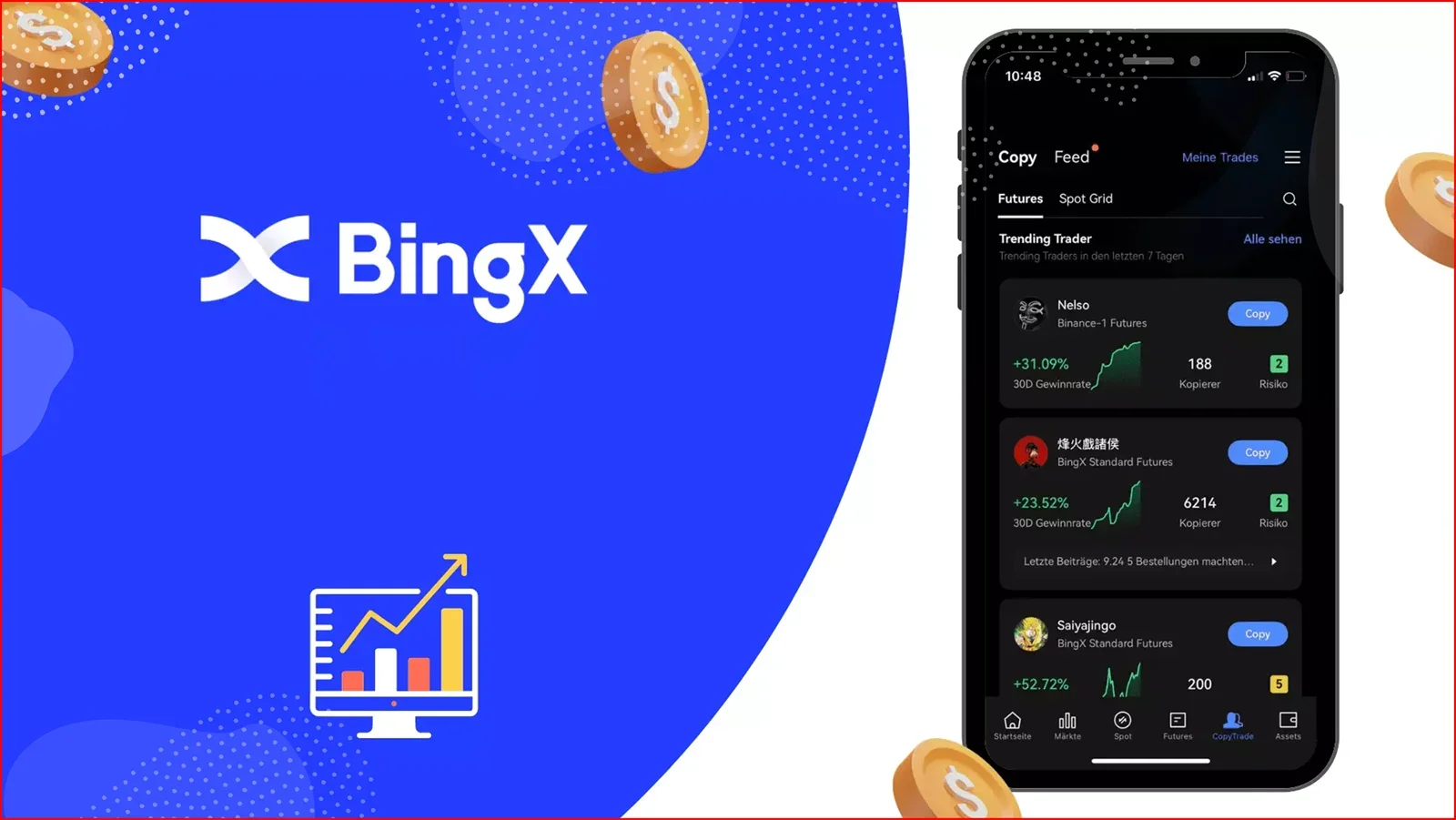
Is BingX Copy Trading Profitable or Risky?
Copy trading sounds simple: you pick a strategy or trader, connect your account, and your trades are automatically replicated. For many people, that promise is what makes platforms like BingX appealing—especially if you’re not confident trading on your own.
But the real question isn’t whether copy trading can work. It’s whether BingX copy trading is consistently profitable or mostly risky, and what risks you should understand before you commit real money.
How BingX copy trading works (in plain English)
BingX copy trading typically lets you:
- Browse a list of traders (often ranked by performance metrics)
- Choose a trader to follow
- Set your investment amount (sometimes also trade sizing limits, depending on the platform settings)
- Automatically copy trades from the selected trader to your account
In theory, this reduces the need to analyze markets daily—you’re essentially “outsourcing” trade decisions to someone else.
However, copying trades doesn’t remove market risk. It just shifts where the decision-making happens—from you to the trader you select.
Is it profitable? What “profit” really means
Copy trading can be profitable, but not always in a predictable way. There are a few reasons performance can look strong during certain periods:
Markets move in cycles
A trader may perform well during trending markets but struggle during choppy or sideways conditions.Past results aren’t guarantees
Even if a strategy has great historical performance, the next few months could be very different.Winning trades may be offset by hidden risk
Some traders use high leverage, tight take-profit targets, or martingale-like behavior. A strategy can look good until a worst-case move hits.You may be copying during different volatility levels
If you start copying after the trader’s “hot streak,” you could experience drawdowns that weren’t visible in their most recent leaderboard position.
So yes—profit is possible. But it’s more accurate to think of copy trading as a way to invest alongside a trader, not as a guaranteed income stream.
The key risks you should understand
Even if the platform functions correctly, there are risks that come with copying other people’s trades. Here are the most important ones to consider.
1) Drawdowns and losing streaks
A trader can experience significant losses during market downturns. When that happens, you’ll likely lose money too because you’re copying the same trades.
Some traders manage risk tightly, while others allow larger drawdowns to recover later. Your profit depends heavily on which style you’re following.
2) Leverage and liquidation risk
If the trader uses high leverage, losses can accelerate quickly. In futures trading, leverage increases both potential returns and the chance of liquidation. Even “smart” traders can get wiped out by sudden market moves.
If BingX copy trading includes futures-style replication (as many platforms do), liquidation risk becomes one of the biggest concerns.
3) Slippage, fees, and timing differences
Even though copy trading aims to replicate trades, exact execution can differ due to:
- Network latency
- Price movement between the original order and the copied order
- Trading fees and funding costs (depending on the product)
Over time, these friction costs can reduce returns—especially if the strategy involves frequent trading.
4) Strategy changes after you start copying
A trader might change their approach, reduce risk, or take more aggressive positions. Some traders may switch to different instruments or timeframes. If your copy setup doesn’t automatically adapt, your experience can change quickly.
5) Selection bias from performance rankings
Leaderboard metrics can be misleading. Traders often get more followers during strong periods, but that also means you might be “late” to the best moment.
Also, a trader’s performance might be influenced by:
- Larger initial capital
- Timing (entering the right market trend early)
- Random luck during a short window
It’s possible to find a trader who looks great on paper but has risk characteristics that are difficult to understand at a glance.
6) Platform and account risks
No platform is risk-free. Operational issues, rule changes, or unexpected platform behavior can affect outcomes. This is true for copy trading platforms as well as traditional exchanges.
While such risks are less common than market risk, they’re still part of the overall picture.
A practical guide to evaluating BingX copy trading
If you want a more grounded approach, don’t focus only on total profit. Use a checklist style process so you can make a more informed decision.
Step 1: Start with small amounts
Before committing significant capital, copy a trader with an amount you can afford to lose. This helps you learn how the system behaves for your account, including performance during drawdowns.
Step 2: Look beyond profit numbers
When reviewing traders, consider:
- Consistency: Are returns steady or mostly driven by a few spikes?
- Drawdown history: How deep were the losses at worst?
- Risk profile: Does the trader use high leverage or very aggressive sizing?
- Trade frequency: Very frequent strategies can accumulate fees and slippage impact.
- Time horizon: Some strategies are designed for short bursts; others work over longer periods.
If the platform provides metrics like win rate, maximum drawdown, risk score, or similar indicators, treat them as tools—then cross-check with reasoning about market conditions.
Step 3: Check the timeframe and market type
A trader who specializes in a specific market regime (like trending conditions) may underperform during different conditions (like range-bound or volatile news-driven markets).
Make sure their trading style matches the environment you expect to be in.
Step 4: Understand your copy settings
Your configuration matters. Depending on how BingX implements copy trading, you may be able to choose things like:
- total amount allocated
- leverage exposure (directly or indirectly)
- whether the system uses a cap or risk control
Set conservative limits where possible. If you can’t control risk directly, you should be more selective about which trader you copy.
Step 5: Plan how you’ll react to losses
A clear rule helps avoid emotional decisions. For example:
- “If my account drawdown reaches X%, I will stop copying and reassess.”
- “If the trader’s performance drops below a threshold for Y days, I’ll switch.”
- “I won’t increase my allocation during a losing streak.”
Without a plan, copy trading can quietly turn into “set it and forget it”—which is dangerous if you’re copying a trader with unstable risk.
Step 6: Diversify your copying (if possible)
Instead of betting everything on one trader, consider splitting across different trading styles (for example, one more conservative and one more aggressive). Diversification won’t eliminate losses, but it can reduce the impact of a single trader’s bad period.
Pros and cons of BingX copy trading
Pros
- Lower learning curve: You don’t need to analyze charts and set strategies from scratch.
- Access to experienced traders: You can benefit from traders who already test and refine their approach.
- Automation: Trades are copied automatically, which saves time and reduces manual errors.
- Opportunity to diversify: If you copy multiple traders, your results may be less dependent on one strategy.
Cons
- No guarantee of profit: Past performance does not ensure future results.
- Drawdown risk transfers directly to you: If the trader loses, you lose too.
- Potential leverage and liquidation exposure: Aggressive risk strategies can cause rapid losses.
- Execution differences and costs: Fees, slippage, and funding can reduce returns.
- Strategy changes: Traders can change tactics, which may not match your expectations.
- Overreliance risk: “Copy and forget” can lead to poor risk management on your side.
Final thoughts: Is it profitable or risky?
If you’re asking the most honest answer—copy trading on BingX is both potentially profitable and meaningfully risky.
It can be profitable when:
- you select traders with consistent risk management,
- you start small,
- and you have realistic expectations about volatility and drawdowns.
It becomes risky when:
- you chase high leaderboard numbers without understanding drawdowns,
- you copy traders using aggressive leverage,
- or you treat it like a guaranteed passive income method.
Copy trading is not a shortcut around trading risk—it’s a shortcut around trading analysis. Your job shifts from “how do I trade?” to “how do I choose who to follow, and how do I manage my exposure?”
If you want
🚀 Sign up for bingx
Register for bingx here to get 20% off trading fees
Start using bingx to trade crypto safely and efficiently.